“Immersive” has been a buzzword in the event and meeting industry for quite some time, and with good reason: People want to feel like they are part of what is happening around them. After all, the senses are what spark our attention and influence our emotions, our connections to any environment are created through what we see, hear and feel. In this edition of Ask an Event Expert, we spoke with event producer Audrey Jai and product manager Tom Drozd about how scenic and lighting create immersive experiences, how planners can include immersion at any budget and what to keep in mind when building effective environments.
Ask an Event Expert: How Do Scenic, Décor and Lighting Contribute to Immersive Event Experiences?
July 27, 2026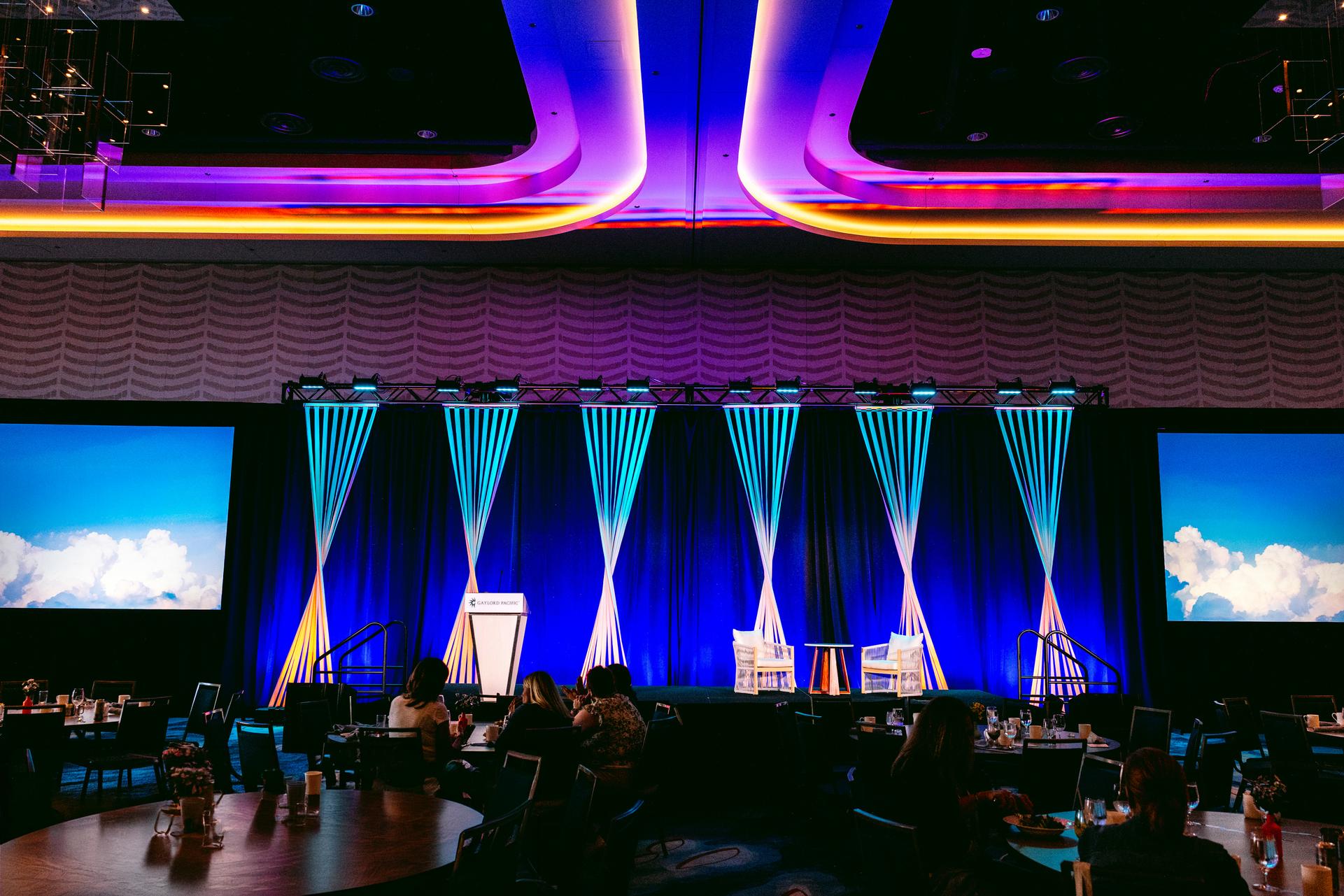
Meet the experts

Tom Drozd
Product Manager

Audrey Jai
Event Producer
What does “immersive” mean to you in an event environment?
Audrey Jai, Event Producer: To me, immersive means intentional, because the whole point is to pull in the people. I don’t like heavy design or things that don’t serve a purpose. I don’t like to use the latest tech just because it’s the newest, hottest. I want everything to have a purpose. When someone says, “We want it to be immersive,” I think about the individual. I’m always intentional about design, but immersive pushes me to think about each person just a little more — how each individual in the room can feel like they’ve had a personalized experience, even in a big general session.
That mindset comes from theater. In a black box show, you’re not just working with limited space — you’re trying to make the audience feel like part of the experience. I’ve seen spaces where the stage was inches away from the audience, where the audience became part of the moment. That’s immersive to me — thinking about each seat, so there’s no bad seat in the house. Corporate shows are still shows. Just because it’s “corporate” doesn’t mean it should be simple talking heads. Your show can be just as compelling as a Broadway production. It’s about how you design with intention.
Tom Drozd, Product Manager: There are two key themes that make an event immersive. The first is something you can’t replicate virtually. No matter how good a screen is at home, it doesn’t match sitting in a room with other people experiencing something live. When you walk into a space that feels polished and purposeful, you immediately think, “I need to be here for this.” That’s the difference from hopping on a virtual meeting — you can’t fully replicate that authenticity.
The second is involvement. How much is the content involving you? That could be screens, presentation style or the way scenic and lighting reinforce what’s happening. If the visuals are strong but the rest of the room doesn’t support them, it deflates the experience. Everything has to work together.
How do scenic, décor and lighting work together to influence the experience people have in the room?
Tom: At the core, scenic creates the environment for the event. Even something simple like drape helps create a clean backdrop, so people aren’t distracted by things like air walls, hallway doors or background noise. That matters because you want participants focused on what’s important. If the space isn’t engaging, people default to distractions. The goal is to guide their attention and reinforce why they’re there.
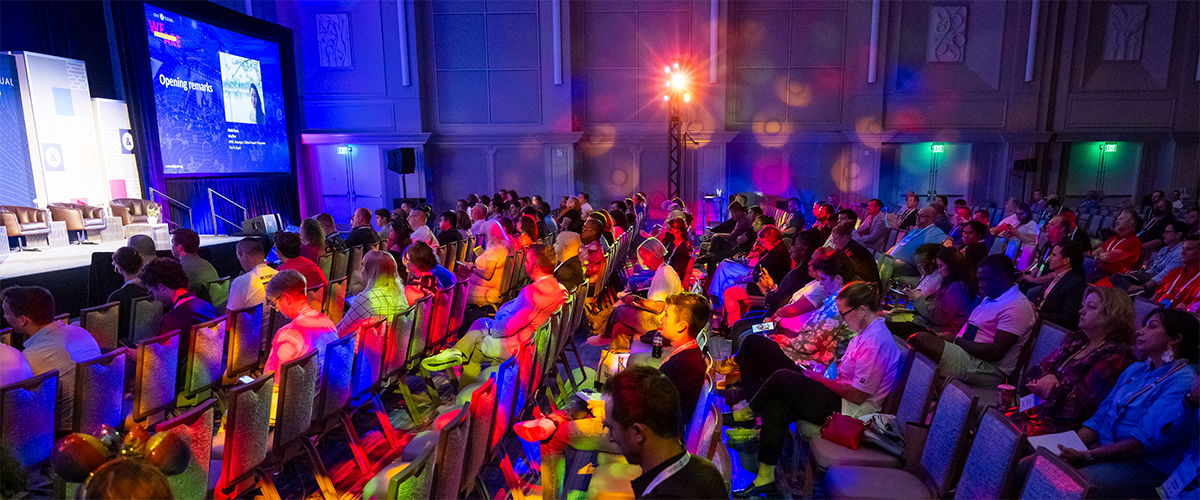
Lighting, scenic and décor are supporting cast members. Scenic elements are essentially a canvas, but lighting brings color, texture and dimension to life. That interaction is what creates visual impact. Lighting also creates focus. Just like a movie theater dims the room to highlight the screen, lighting helps direct attention to the presenter and content. Proper lighting doesn’t just make someone visible, it separates them from the background and enhances the overall viewing experience.
Audrey: You’re in the room, so put some light on the audience. That alone can change how people feel. When event participants are lit, even subtly, they feel like they’re part of the experience. Also, it doesn’t have to be expensive. Sometimes it’s simple choices that make the biggest difference. I had a client with a mid-range budget who wanted an LED wall but didn’t want it to feel generic. We added a scenic wood element into the design and it completely changed the look. It gave the event warmth and elegance.
Do immersive environments have to be expensive?
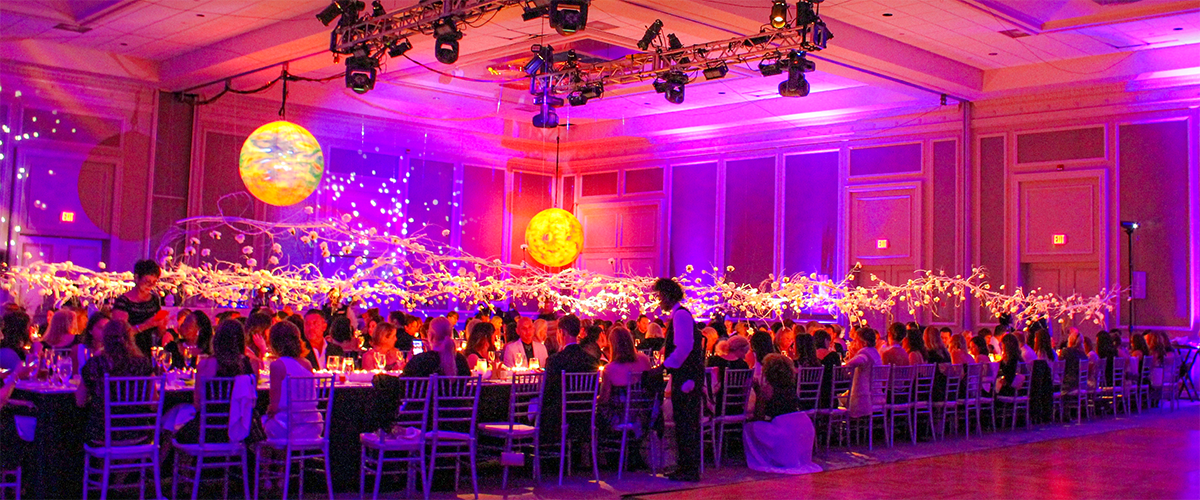
Audrey: Creative people are creative people. Budget only matters in how you meet the client where they are. My goal is for clients to feel like, “You understand my budget and you’re working with me.” Lighting is one of the easiest ways to scale. Adding a few fixtures, adjusting placement or avoiding rigging can make a big impact without adding cost. I don’t feel limited by budget, I see it as a starting point. I want planners to feel comfortable asking for the big idea, because we can scale it. You might see something like the Super Bowl and think you can’t achieve anything close, but we can take what you like about it and adapt it to your budget.
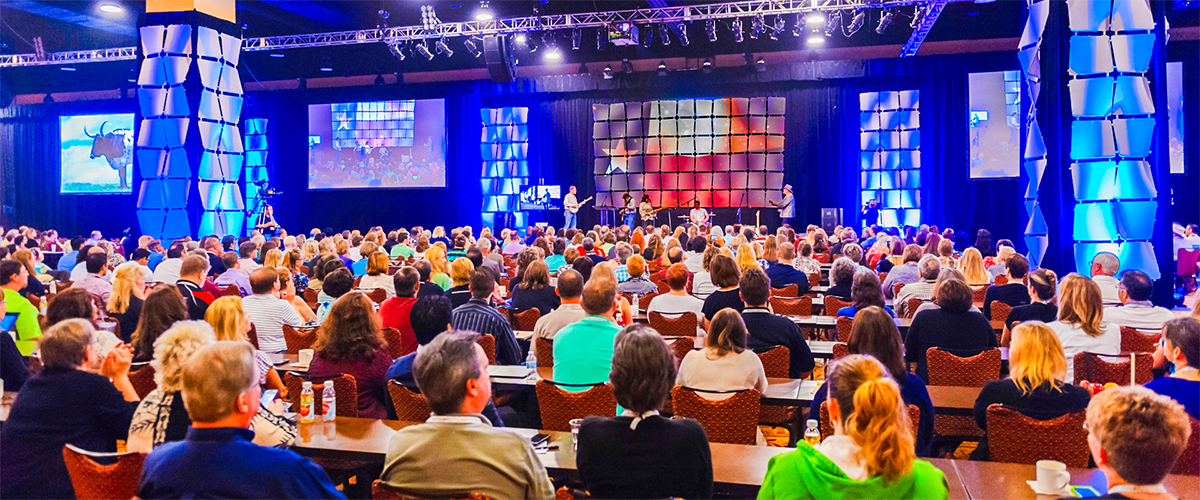
Tom: At their core, scenic and décor are about creating a cohesive environment and that can start with something as simple as drape, like velour drape. The goal is to ensure every budget level has an option that works. From there, you can build incrementally. Décor drape adds texture and color. Scenic tiles add dimension. Soft sets and panels introduce more flexibility and visual interest. It’s about reinforcing the message in a way that fits the event.
How should planners think about choosing scenic and lighting solutions?
Tom: It really depends on who the customer is, what the brand demands, what the goals are and the environment they’re working within. Uplighting is a good example of scalability. At a basic level, it adds color and energy to a space. At a more advanced level, lights can change throughout the day to reflect mood shifts or brand moments. Stage lighting also depends on intent. Are you recording? Livestreaming? Managing a large audience? Each scenario influences how lighting should be designed. Even smaller breakout rooms benefit from lighting. It doesn’t need to be excessive, but rather just enough to create focus and continuity with the larger event experience. For outdoor events, scenic and lighting become even more important because they help define the space, support visibility as daylight changes and create a more intentional environment in settings that may not have built-in structure.
How is brand showing up in these conversations now?
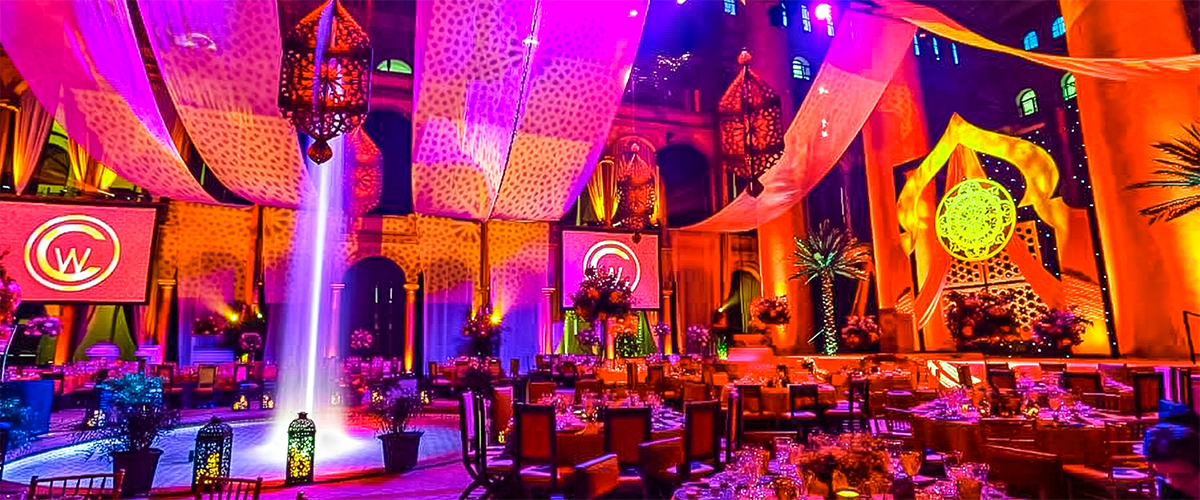
Audrey: We’re seeing more merging between brand identity and event design. Clients are asking how their brand shows up in the experience itself, not just visuals on screen, and that’s new. Previously, the theme drove the creative. Now it’s more collaborative: We get asked questions like, “Where should the brand live? How should it feel?” But there’s a balance. We guide the experience and shape the event’s look and feel, but brand decisions ultimately have to come from the client.
What is the biggest misconception planners have about immersive design?
Audrey: They think if they can’t have the biggest version of something, they can’t have any version at all, but that’s not true. You can scale ideas down and still create impact. The key is understanding what you like about something. Once we know that, we can design toward it in a way that fits your event.
Tom: There are multiple approaches to achieve what you’re going for. The goal is making sure people stay engaged and connected to the content. Lighting, for example, can introduce texture and branding through simple tools like gobos, or more dynamic effects with moving fixtures. It’s a way to build engagement step by step without jumping to more complex (and costly) solutions.
What do you want planners to understand most about scenic, décor and lighting?
Tom: It doesn’t have to be complicated or expensive. It’s about helping presenters reinforce their message in a way that fits the event.
Audrey: We can meet you where you are. Ask for the cool thing! We’ll help figure out how to get you there.
What Our Experts Say
Scenic, décor and lighting are tools for sharpening attention, influencing emotion and infusing spaces with meaning. When used intentionally, they create cohesion, reinforce messaging and help participants stay present in the moment. Explore the possibilities of immersive event design with our inspirational lookbooks.
Ready to get started?
Explore display solutions that set your event apart!